
Why businesses should invest in sea freight services
For businesses trading across borders, logistics decisions shape everything from operating costs to customer satisfaction.
Choosing the right transport method is rarely just about speed. It is about reliability, scalability, cost control, and long-term resilience. For companies moving substantial volumes of goods internationally, sea freight continues to be one of the most dependable and commercially sound options available.
Despite advancements in air and road transport, shipping by sea remains the backbone of global trade. From raw materials and manufacturing components to finished products bound for international markets, maritime transport supports supply chains of every size.
Investing in professional sea freight services allows businesses to benefit from established global routes, predictable scheduling, and cost-efficient movement of goods at scale.
This helpful guide will explain exactly what sea freight is, why it remains so widely used, and how it delivers tangible value for businesses operating across global markets. It will also detail how working with an experienced logistics partner like OSE European guarantees shipments are managed efficiently from origin to destination.
What is sea freight and why does it matter?
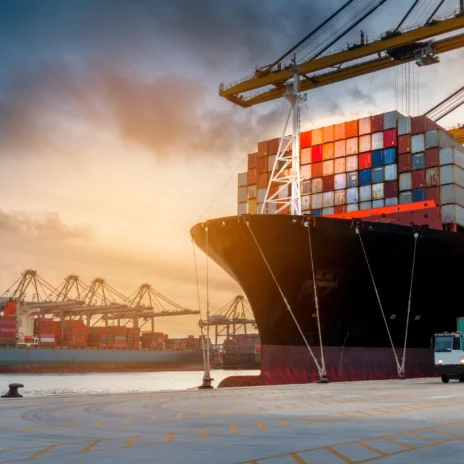
Sea freight refers to the transportation of goods by cargo ships across oceans and seas, typically using standardised containers. These containers are designed to be transferred seamlessly between ships, ports, trucks, and rail networks, forming a crucial part of modern intermodal logistics.
As part of international supply chains, sea freight enables businesses to move goods between countries and even continents efficiently and at scale. Ports act as strategic gateways for trade, linking producers, manufacturers, distributors, and retailers across global markets. The system is underpinned by established shipping lanes and internationally recognised standards for container handling and documentation.
What sets sea freight apart is its ability to handle volume. While air freight prioritises speed and road transport excels at regional distribution, shipping by sea is designed for bulk and consistency. For businesses importing raw materials, exporting manufactured goods, or supplying overseas customers, sea freight services provide a stable and practical foundation for international trade.
The cost-effectiveness of sea freight
Cost remains one of the most compelling reasons businesses choose sea freight. When measured on a cost-per-unit basis, shipping by sea is often significantly more economical than air or road transport, particularly for heavy or high-volume goods.
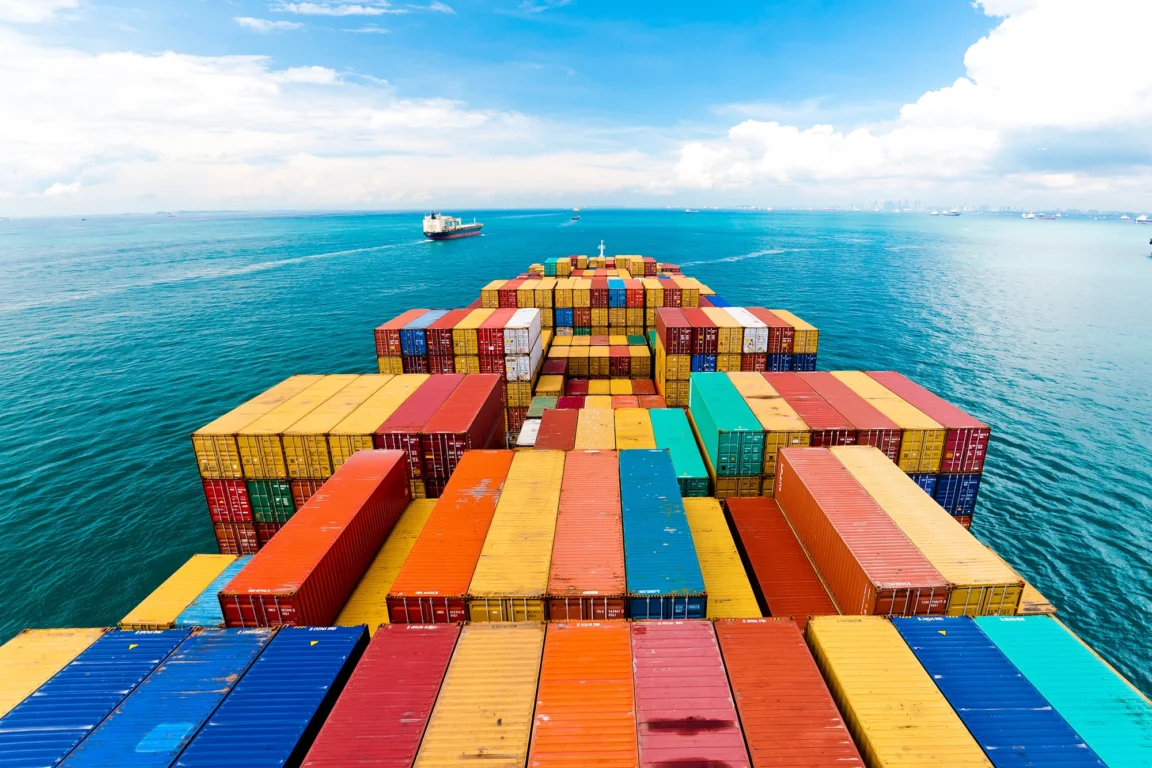
Cargo ships are designed to carry thousands of containers in a single voyage, spreading operational costs across vast quantities of freight. This efficiency translates into lower shipping rates for businesses, making sea freight services especially attractive for manufacturers, wholesalers, and retailers managing regular international shipments.
Sea freight also offers predictability in pricing. While fuel surcharges and seasonal fluctuations do exist, costs are generally more stable than air freight, which can change rapidly in response to demand spikes or capacity shortages. For businesses planning long-term supply chains or operating on tight margins, this stability supports more accurate forecasting and budgeting.
In addition, sea freight allows companies to consolidate shipments, reducing the frequency of dispatches and further lowering overall logistics costs. By planning shipments strategically, businesses can align production cycles with shipping schedules, keeping storage and handling expenses to a minimum.
Capacity and flexibility for larger volumes
One of the defining advantages of sea freight is its ability to accommodate large and varied cargo types. Containers come in standard sizes, typically 20ft and 40ft, but can also be adapted for specialised requirements. This makes sea freight suitable for everything from palletised consumer goods to industrial machinery.
Businesses can choose between Full Container Load (FCL) and Less than Container Load (LCL) options. FCL allows a single shipper to use an entire container, offering greater control and, often, quicker transit times. LCL enables multiple shipments from different businesses to share container space, making sea freight services accessible even for smaller volumes.
This flexibility supports businesses at different stages of growth. Start-ups and SMEs can begin with shared containers, while larger organisations tend to benefit from dedicated capacity as volumes increase. The ability to truly scale shipping operations without changing modes of transport is a major advantage for companies expanding into new markets.
Oversized or non-standard cargo can also be accommodated through specialist equipment such as flat racks or open-top containers. With the right logistics partner, complex shipments can be planned and executed efficiently, even when dimensions or weight exceed standard limits.
Environmental advantages of sea freight services
Sustainability is becoming a central consideration in logistics decision-making. Businesses are under increasing pressure from both customers and stakeholders to reduce their environmental impact. In this context, sea freight offers clear advantages.
Measured by CO₂ emissions per tonne of cargo, shipping by sea is considerably more efficient than air or road transport. While cargo ships do produce emissions, their ability to carry vast quantities of goods results in a lower environmental footprint per unit moved. For businesses seeking to balance operational needs with sustainability goals, sea freight services present a responsible choice.
The maritime industry is also investing in cleaner technologies, alternative fuels, and improved vessel efficiency. Many shipping lines are adopting measures to reduce fuel consumption and emissions, further strengthening the environmental case for sea freight.
Simply put; by integrating sea freight into their supply chains, businesses can demonstrate a commitment to more sustainable logistics without compromising on reliability or reach.
Global connectivity via established routes
Sea freight underpins international trade by connecting markets across continents. Major shipping routes link Europe with Asia, the Americas, Africa, and beyond, supported by an extensive network of ports and terminals.
This global connectivity allows businesses to source materials, manufacture products, and distribute goods on an international scale. Regular sailing schedules and established transit times make planning more straightforward, even for complex, multi-country supply chains.
Ports operate within highly structured systems, governed by strict regulations like the Freight Containers (Safety Convention) Regulations 2017, and are supported by advanced infrastructure. This consistency ensures that sea freight services remain dependable, even as global trade volumes fluctuate.
For businesses entering new markets, sea freight provides access to regions that may not be economically viable via air transport. It enables long-distance trade at a scale that supports competitive pricing and market expansion.
Security and reliability in transit
Shipping goods over long distances naturally raises concerns about security and condition upon arrival. Sea freight addresses these concerns through controlled processes and robust handling standards.
Containers are sealed at origin and remain closed until they reach their destination, reducing the risk of interference or damage. Ports operate under strict security protocols, with regulated access and monitoring throughout the loading and unloading process.
While transit times are longer than the likes of air freight, they are generally predictable. This reliability allows businesses to plan inventory levels accurately and maintain consistent supply to customers. When managed properly, sea freight services offer a high level of dependability for international shipments.
Professional logistics providers also track shipments throughout their journey, providing visibility and updates at key milestones along the way. This transparency is essential for businesses that need to coordinate production schedules and onward distribution.
Specialised cargo capabilities
Sea freight is not limited to standard, palletised goods. With the right planning and expertise, it can be an effective solution for transporting non-standard, oversized, or logistically challenging cargo.
For example, oversized industrial equipment, construction materials, and project cargo are frequently shipped by sea using tailored container solutions. These shipments often require careful coordination, from selecting the correct container type through to planning safe loading and unloading processes at both origin and destination.
Where access or handling constraints exist, we can also provide self-loading and self-unloading container vehicles, commonly known as sideloaders.
Sideloaders allow containers to be lifted on and off the vehicle without the need for cranes or forklifts on site, making them particularly valuable for locations with limited space or restricted lifting facilities. This approach can reduce handling risks, minimise delays, and offer greater flexibility when managing complex deliveries.
By working with an experienced logistics partner offering practical, site-specific solutions, businesses can move specialised cargo with confidence, knowing that each stage of the shipment is planned with safety and compliance in mind.
Why choose OSE European’s sea freight services?
Choosing the right logistics partner is as important as choosing the transport mode itself. OSE European provides tailored sea freight services designed to support businesses trading internationally, regardless of shipment size or complexity.
We offer end-to-end coordination, from booking and documentation to customs clearance and final delivery. With expert knowledge of international regulations and established relationships across global networks, our team makes sure shipments move smoothly through every stage of transit.
Clear communication is also central to our approach. You’ll receive regular updates and practical guidance from a single point of contact who understands your business and its requirements. This removes any uncertainty from international shipping and allows you to focus on running your business.
By partnering with us, businesses gain a logistics partner committed to keeping international deliveries efficient, compliant, and stress-free. Contact us now to find out more about our sea freight services, or any other logistics services you might need.